
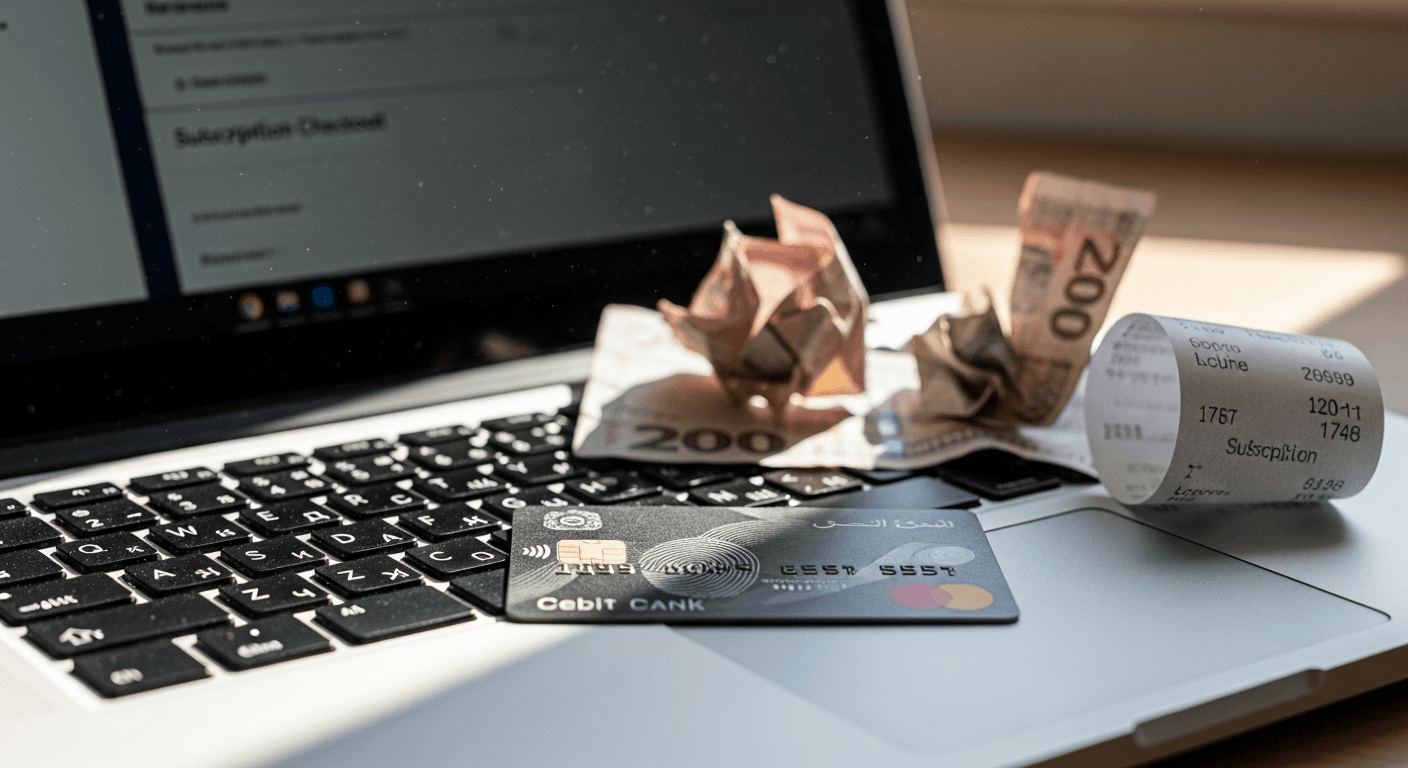
In Morocco, a developer's tools are paid for in foreign currency. An advanced AI subscription for coding: about 1,000 DH a month. APIs for client projects. Hosting, SaaS tools, domains. And like everyone: Netflix, Spotify. Since June 11, 2026, almost all of it costs 20% more. Meanwhile the legal ceiling on what you're allowed to pay online has barely moved. Here's the bill, with numbers.
Morocco now applies its 20% VAT to foreign digital services, while the e-commerce allowance, raised from 15,000 to 20,000 DH/year, remains the cap on everything an individual can pay online abroad, work tools and personal purchases combined. For developers and creatives whose tools are foreign-currency subscriptions, the two measures together change the economics of the job.
For readers outside Morocco: what on earth is a "dotation"?
If you're reading this from Paris, London or New York, one concept needs explaining, because it doesn't exist in your life: in Morocco, an individual has a legal annual ceiling for paying online abroad: 20,000 DH per year, roughly €1,850 or $2,000. Everything counts against it: your Figma subscription, your AWS server, your 3am AliExpress order. Once the ceiling is reached, the card declines. It's not an outage. It's foreign-exchange regulation.
Yes: a French developer can subscribe to fifteen SaaS tools and no institution is counting. We count. Keep that in mind for what follows.
What exactly changed
Since June 11, 2026, foreign platforms selling digital services to Moroccans (streaming, AI subscriptions, cloud, online software) must register with the Moroccan tax authority (DGI) and collect the 20% Moroccan VAT. The measure comes from the 2024 Finance Law; enforcement arrived this summer. When a platform passes the tax on, and platforms always pass the tax on, the subscription gets 20% more expensive for the Moroccan customer.
A typical freelance developer or designer stack, before and after
| Category | Tool (typical price) | Before | With 20% VAT |
|---|---|---|---|
| AI | Advanced AI subscription (Claude, ChatGPT pro tier) | ≈ 1,000 DH/mo | ≈ 1,200 DH |
| Standard AI subscription | ≈ 200 DH | 240 DH | |
| APIs (Google AI, OpenAI, usage-based) | ≈ 300 DH | 360 DH | |
| Design | Figma Professional | ≈ 160 DH | 192 DH |
| Adobe Creative Cloud | ≈ 600 DH | 720 DH | |
| Canva Pro | ≈ 130 DH | 156 DH | |
| Infra & dev | Vercel / Pro hosting | ≈ 200 DH | 240 DH |
| AWS / servers | ≈ 200–300 DH | 240–360 DH | |
| JetBrains / licenses | ≈ 170 DH | 204 DH | |
| Domains (amortized) | ≈ 30 DH | 36 DH | |
| Business | Google Workspace | ≈ 70 DH | 84 DH |
| Notion / team tools | ≈ 100 DH | 120 DH | |
| Personal | Netflix + Spotify | ≈ 180 DH | 216 DH |
(Typical 2026 prices converted to dirhams; exact amounts vary with exchange rates.)
Nobody pays for all of it at once. But take a realistic profile: a developer with one advanced AI subscription, APIs, hosting and two streaming services runs around 1,700 DH/month before VAT, over 2,000 DH after, roughly 4,000 DH of tax per year. One extra month of subscriptions a year, donated to the tax office. A designer running Adobe, Figma and Canva starts at ≈ 900 DH/month in creative tools alone. That's before opening a single client file.
For an employee, it's annoying. For an independent whose tools are the means of production, it's a direct increase in the cost of doing the job.
The allowance paradox
On January 1, 2026, Morocco's exchange office raised the e-commerce allowance from 15,000 to 20,000 DH per year: a real, welcome 33% increase. Thank you. Now do the math.
The professional stack above already consumes close to 25,000 DH a year with VAT included. Add what nearly everyone does: AliExpress, Temu or SheIn orders: easily 4,000 DH a year of gear, the cables you rebuy because you never find the old ones, and everyday purchases. Those physical orders don't take the digital VAT, but they run on the same card and eat the same allowance. Realistic total: nearly 30,000 DH of needs against a 20,000 ceiling. A third of the year doesn't fit.
And here's the detail nobody mentions: the VAT eats the allowance too. Paying 1,200 DH instead of 1,000 means hitting the ceiling 20% faster. The state raised the ceiling with one hand and melts it with the other. You have to admire the coordination.
The controversy, honestly
There are two readings, and both hold up. The state's side: digital giants were collecting billions in Morocco without paying the VAT any neighborhood grocery pays. The measure restores tax fairness, and Morocco is following the OECD, the EU and most of the region. Nothing scandalous.
The users' side: the tax hits Saturday-night entertainment and Monday-morning work tools at the same rate, in a country with a Digital Morocco 2030 ambition that trains 100,000 people in tech every year. Moroccan developers now pay 20% more for their tools than the European competitors they're asked to catch up with, plus an annual ceiling on top.
The exceptions that change everything (if you qualify)
- Startups labeled by the ADD: e-commerce allowance raised to 2 million DH, plus up to 10 million DH of investment abroad. If that's you: congratulations, this article isn't for you.
- Business accounts: for a company, paying foreign services goes through the services-import regime: a different channel with different rules. Ask your bank.
- Auto-entrepreneurs and freelancers: the grey zone: professional tools, an individual's allowance. That's precisely where the framework deserves to evolve.
What an independent can actually do
Audit subscriptions every quarter: whatever doesn't produce value gets cut. Prefer annual billing when the discount justifies it, keeping an eye on the allowance meter. And document every expense: these tools are professional costs, and clean records prepare for the day the status recognizes them properly.
The bottom line: taxing digital giants is defensible. But a country aiming for 240,000 digital jobs would gain from distinguishing work tools from entertainment. A developer paying for an AI assistant is not just another streaming subscriber. One of the two is trying to build Digital Morocco 2030. Preferably before hitting the ceiling in September.
Sources
Médias24, VAT on foreign digital services · Hespress · Le360 · Le Matin, 2026 allowances · Office des Changes
Enjoyed this article?
Let's build something together.