

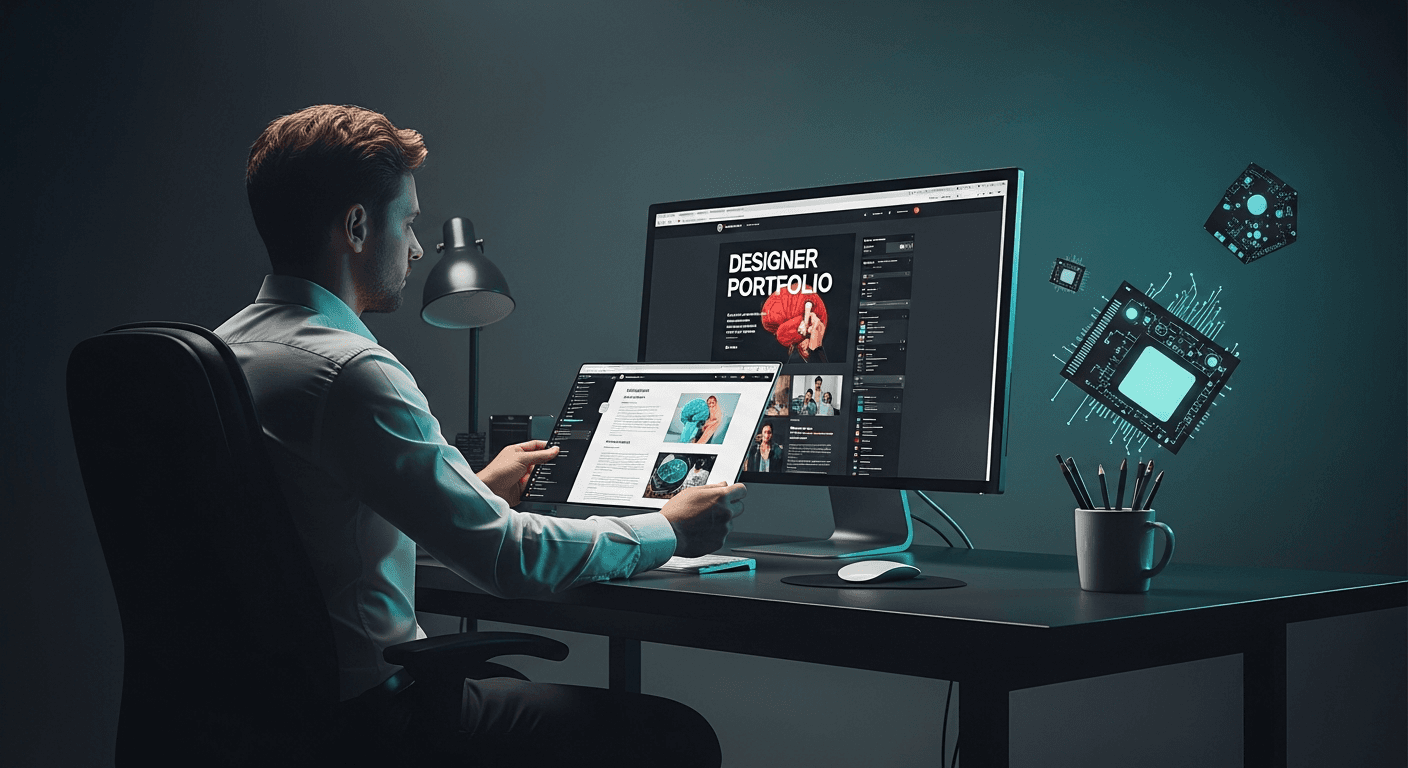
Most developer portfolios are built to impress other developers. That's the mistake. If you want freelance clients, your portfolio has one job: convince a non-technical person, in under a minute, that you can solve their problem. Here's how I built mine to do exactly that — and what I'd change about most I see.
The short version: a developer portfolio that wins clients isn't a gallery of code. It's a clear value proposition, a few real case studies, and enough SEO that people actually find it.
Why your portfolio matters more than your CV
Clients don't read CVs; they click links. A live portfolio is proof you can ship — it's the difference between "I know React" and "here's a thing I built that works." For a freelancer, it's your storefront, your sales pitch, and your credibility in one URL.
What to include
- A one-line value proposition: who you help and how (visible in 3 seconds)
- 3–5 real projects with context, not just screenshots
- Your services and the problems you solve, in plain language
- A photo and a bit of personality — people hire people
- An obvious way to contact you on every page
Projects that actually convert
For each project, tell a tiny story: the problem, what you built, the stack, and the result. A client doesn't care that you used hooks — they care that you took a messy problem and shipped a working solution. Show outcomes, link to live demos, and pick projects that resemble the work you want more of.
SEO basics (the part 90% skip)
A portfolio nobody finds isn't a portfolio. Put your name + specialty + location in your titles, use real page descriptions, publish a few articles around what your clients search for, and get links from your LinkedIn, GitHub, and Malt. This is exactly how clients land on a site like this one — through search, not luck.
Common mistakes to avoid
Writing for engineers instead of buyers. Showing tutorial projects or to-do apps. A slow, over-engineered site (clients leave). No clear contact. And no SEO at all, so the whole thing sits invisible.
See mine
I practice this on my own site — clear value, real case studies, and content that ranks. Have a look at my projects for how I present work, and if you want help building or sharpening yours, get in touch.
Enjoyed this article?
Let's build something together.